Whoa!
Okay, hear me out.
I’ve been poking around wallets since the early days of ETH, and something felt off about most of them.
They promised safety but left out real usability, or they had bells and whistles without the fundamentals, which made me wary.
On one hand the industry is leaps ahead, though actually—wallet UX still trips up smart people daily.
Seriously?
Yeah.
Most wallets treat transaction simulation like an afterthought, and that bugs me.
Simulation matters because it turns guesswork into measurable outcomes, which reduces costly mistakes.
Initially I thought a hardware wallet alone would solve everything, but then reality hit: gas spikes, token approvals, and sneaky contract calls don’t care about your cold storage.
Hmm…
My instinct said there must be a wallet that blends safety with practical tooling.
I tried a lot of options and kept circling back to tools that gave me visibility before I hit send.
One wallet that stood out was rabby wallet because it integrates transaction simulation, approval controls, and sane defaults for portfolio tracking.
I’ll be honest—I like its approach, though it’s not perfect and I have a few reservations.
Short answer: use simulation.
Long answer: simulate every meaningful interaction.
When you preview what a contract call will do, you avoid surprises like unexpected token approvals or a multisend that drains more than intended.
That’s why portfolio tracking matters too; if your wallet can show you unrealized gains, token origins, and exposure across chains, you make decisions with context.
(Oh, and by the way… if your wallet can’t show historical performance, you’re flying blind.)
Check this out—
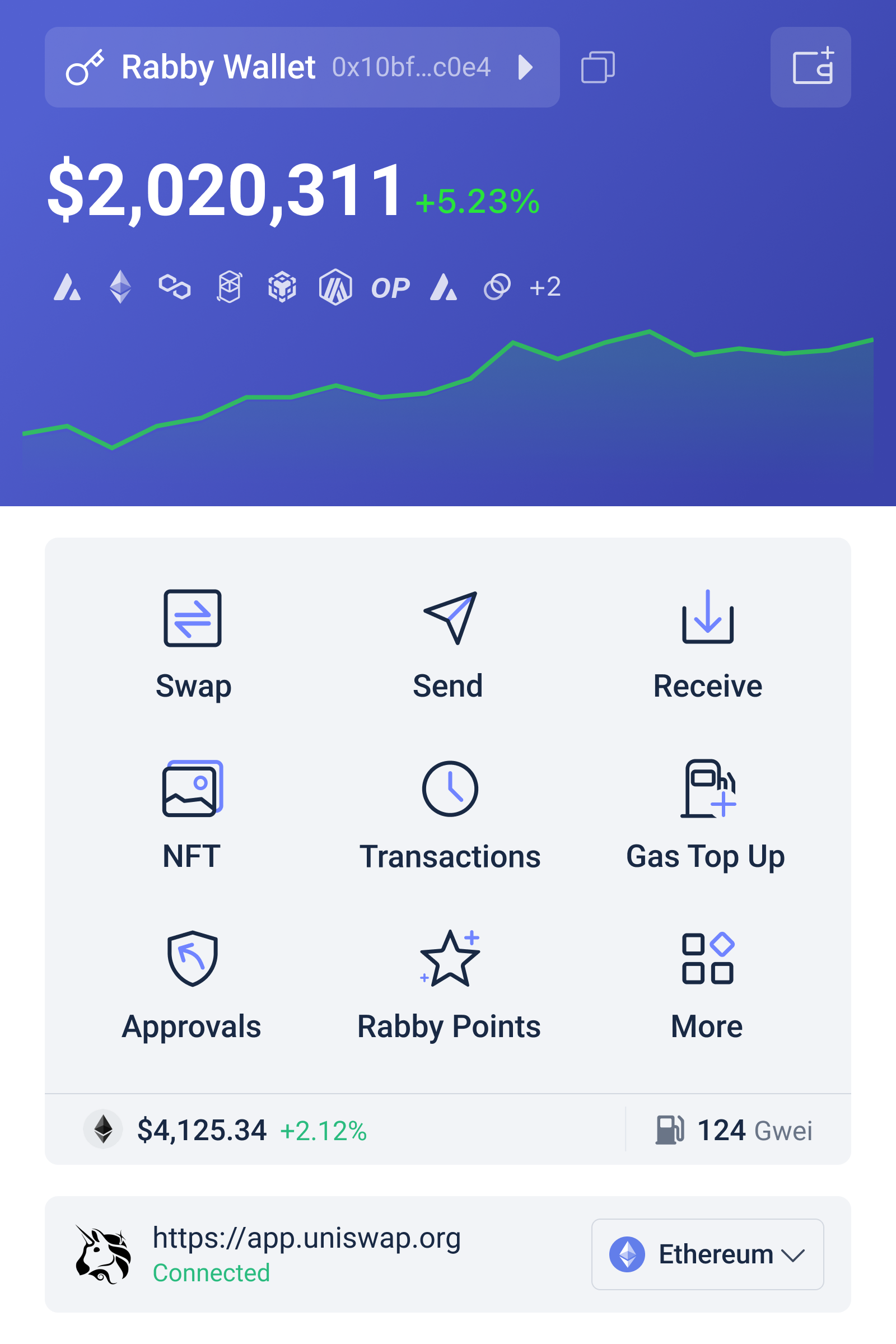
Really, a visual matters.
Seeing estimated gas, slippage, and a breakdown of the call helps me sleep.
Rabby wallet surfaces those things without being noisy or flashy, which I appreciate because I’m biased toward clarity.
However, it took me a while to trust the numbers—I double-checked several transactions on Etherscan and on-chain explorers before I felt comfortable relying on the simulation outputs.
How Transaction Simulation Changes Outcomes
Whoa!
Simulations are like rehearsals for moves you plan to make.
If you didn’t preview a batch transfer or a token swap, you might sign away value by accident.
On top of that, simulation helps when interacting with AMMs or yield protocols, where slippage and fees can eat a position if you’re not careful.
So yeah—simulate, simulate, simulate—because preventing a mistake is way cheaper than fixing one after the fact.
My thought process evolved here.
Initially I thought the only risk was private key compromise, but then I learned the other, more mundane risks—bad UX, misleading approvals, mistaken chain selections.
Actually, wait—let me rephrase that: most losses aren’t from cataclysmic hacks, they’re from tiny slips compounded over time.
On a subtle level, a good wallet nudges you toward safer defaults and removes cognitive friction.
That combination matters for both newcomers and power users.
Portfolio Tracking: Not Just Pretty Charts
Whoa!
Portfolio features aren’t just vanity.
They provide exposure checks, help detect rug pulls (by showing token origin and liquidity concentration), and let you audit the history of on-chain moves quickly.
When a wallet can cross-reference prices across chains, show realized vs unrealized P&L, and flag suspicious transfers, it becomes an active risk manager, not mere storage.
I’m not 100% sure every user uses all those features, but when things go sideways they wish they had them.
Sometimes the data will surprise you.
One time I found an old token transfer that I forgot about, and the wallet’s aggregated view made it obvious how much weight that token had in my overall exposure.
That changed my rebalancing choices for the quarter.
On the other hand, portfolio trackers can lull you into overtrading if presented as a dopamine feed, so a thoughtful UI is critical.
It’s about balance—data without action is noise, and action without data is risky.
Security Layers I Actually Use
Wow!
Multi-layered security is essential.
Start with a hardware key for long-term holdings, add transaction simulation and approval controls for everyday interactions, and set chain-specific safeguards so you don’t accidentally sign a cross-chain bridge contract you don’t intend to.
I use a combination of hardware, software wallets for day trading, and monitored cold storage for long positions—the three-tier approach reduced stress for me.
On the flip side, convenience features like auto-signing or blanket approvals are red flags; avoid them if you can.
Something felt off when blanket approvals became fashionable.
My gut said “nope” and so I adopted an approvals-first policy: revoke and grant on demand.
This is tedious sometimes, but worth it, because you limit the blast radius if an app gets compromised.
Tools that simplify this process—showing approval allowances and letting you batch-revoke—are lifesavers.
Also, keep your recovery phrase offline and don’t store it in cloud notes, because people still do that and it’s very very risky.
Where Rabby Wallet Fits In
Okay, so check this out—
In my workflow, a wallet has to do three things well: secure keys, simulate transactions accurately, and show clear portfolio insights.
Rabby wallet hits those checkboxes by combining approval management, transaction simulation, and a tidy portfolio dashboard.
I embedded it into my toolkit and it reduced the frequency of near-miss errors dramatically.
Nobody’s claiming perfection—there are edge cases and UI quirks that could be improved—but overall it gave me the right mix of confidence and control.
I’m biased, but I think product design matters more than we say.
If a feature is buried behind five clicks, it’s effectively absent for most users.
Rabby wallet puts important controls up front, and that design choice matters when you only have 30 seconds to decide whether to sign.
If you want to check it out, here’s a direct link to rabby wallet—I used it while writing this and it made a few things easier.
(Yes, I clicked through live demos. I’m human.)
FAQ
Do I need a hardware wallet if I use a smart wallet like Rabby?
Short answer: it depends on your risk tolerance.
Longer answer: hardware adds a strong layer of protection for large holdings, while a well-designed software wallet with transaction simulation is fine for daily activity.
On balance, I recommend a hybrid approach if you hold significant value.
How often should I check approvals and portfolio exposure?
Monthly reviews are a good baseline, but do a quick check after any major market move or protocol update.
Also, revoke old approvals if you stop using an app—it’s easy to forget and it’s risky.
Little maintenance prevents big headaches.
Can simulation guarantee I won’t lose funds?
No.
Simulation reduces risk and highlights potential problems, but it can’t predict slippage in highly illiquid pools or third-party exploits.
Think of it as a valuable tool in a risk-management toolbox, not a silver bullet.