
Whoa!
I’ve been poking around Solana block explorers a lot lately. At first it felt like a firehose of signatures, accounts, and program logs. My instinct said this would be dry—boring, even. But then a few transactions told a story (oh, and by the way, some of those stories were wild). Something felt off about how casually people read transaction histories, and actually—I started digging deeper and saw patterns that matter for every user, from devs to traders.
Here’s the thing. When you watch a token swap or a failed program call on Solana, you’re seeing the protocol’s behavior in real time. Seriously? Yes. The transaction signature is like a headline; the inner instructions are the paragraphs. Short-term traders need speed. Builders need context. Long-term holders need provenance and auditability, and those details live in explorers.
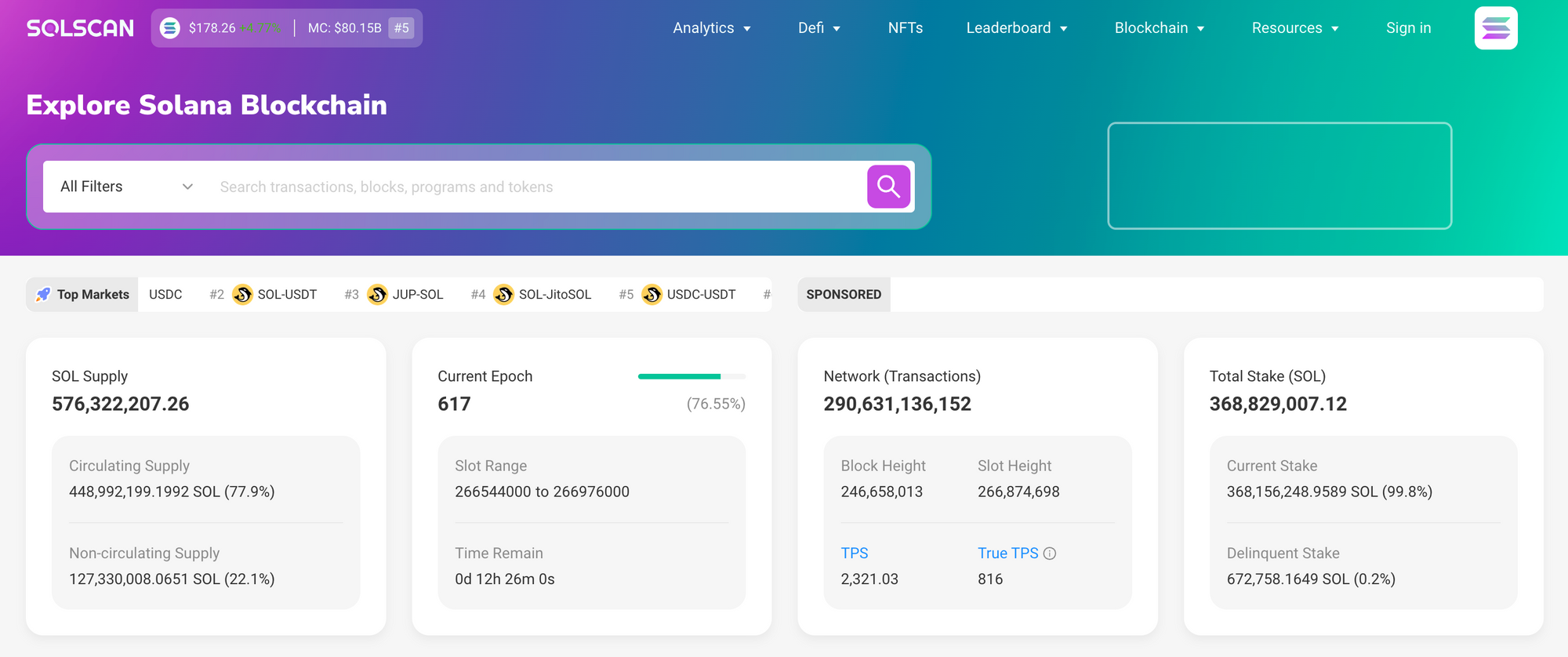
Okay, so check this out—Solscan has become one of the go-to tools for many of us. I’m biased, but its layout makes it easy to parse multiple instruction types in a single transaction. Initially I thought a single explorer would be enough, but then realized redundancy matters: different explorers surface different logs and populate program names differently. On one hand you want simplicity; on the other it’s crucial to see the raw logs when things go sideways.
How to read a Solana transaction (fast)
First look for the signature and status—success or failure. Next, scan the fee payer and compute units to understand cost. Then open the inner instructions: you’ll see which programs were invoked (token program, serum DEX, a custom smart contract). If there are program logs, skim them for “error: ” or for emitted events. For tokens, check the account changes and balance deltas; that clarifies who moved what to whom.
Pro tip: copy the signature and paste it into the solscan explorer official site when you want a second view or when you need their decoded instruction labels. My instinct told me to cross-check at least once per suspicious event, and that practice has caught misattributed transfers more than once.
When a transaction fails, don’t panic. Failed txs still consume compute units and may emit logs that reveal the failure reason. Hmm… often the reason is a missing account, insufficient funds, or a CPI (cross-program invocation) limit. Sometimes it’s a subtle version mismatch in the program ABI. Initially it looked like random noise, but with repeated observation you begin to recognize recurring error signatures.
Something else that bugs me: people assume finality works like other chains. Solana’s block times are short and confirmations are fast, though network conditions can introduce replays or reorderings (rare, but real). Watch the slot history and block height if you care about sequence fidelity. For forensic work, get the slot, ledger entry, and parent slots—those details anchor the event in the ledger and help when you cross-reference backups or archive nodes.
Why instruction decoding matters
On a surface level, decoded instructions are convenience. But they also reduce human error during audits. Really? Yep. Raw bytes are opaque. Decoding turns those bytes into named actions like “transfer”, “approve”, “swap”, or “initialize account”. For teams troubleshooting a failed swap, the difference between a “transfer” and an “initialize account” instruction is everything.
Practical example: a token swap that appears to succeed for the sender might actually leave the receiver’s token account uninitialized. The explorer shows a token account creation followed by a failed transfer, and that explains the apparent money-losing event. Initially I missed that detail too—then I made a checklist: check account creation steps first, then balance deltas. Little checklist, big headaches avoided.
Also, not all explorers decode every custom program. Some labels come from heuristics or developer-provided metadata. When you see an unlabeled program, copy the program ID and look up the repo or docs. Sometimes you’ll find a newer version of a program that changes instruction layout—so the explorer might show it as unknown until it updates. That delay is a good reason to keep a second explorer handy.
On-chain analytics use cases I see every week
Traders: verify exact slippage and routing. Builders: trace cross-program invocations. Auditors: verify sequence of state changes. Users: confirm token provenance before accepting airdrops. Each use case asks for a slightly different inspector mindset—same tool, different lens.
For instance, if you’re tracking MEV or sandwich attacks, watch the pre and post state for the involved accounts and observe how the routing across AMMs changed within microseconds. That will show front-running patterns, whether bot or coordinated liquidity taker, and sometimes even reveal the originating wallet. On the other hand, not every suspicious pattern is malicious; some are just poor routing or timing—a distinction you learn to make with experience.
Another practical thing: watch rent-exempt thresholds. Accounts that hold tiny token balances might get closed or consolidated. That affects airdrop recipients who never claim their tokens, as well as low-value holders who think their balance is safe. I once lost track of a tiny staking reward because an account relevant to the reward was later closed—lesson learned.
Trust but verify: explorer limitations
Explorers surface nodes’ view of the chain, which is great, but they’re not the ledger itself. Data caching, delayed indexing, or label mismatches happen. Also, mempool ordering and local node filters can affect what an explorer shows in near-real-time. So if you’re doing high-stakes reconciliation, check the raw ledger or run a validator snapshot when possible.
Not everything will be perfectly labeled. Some explorers import token metadata from off-chain sources; other explorers infer types. If something seems inconsistent, get the transaction signature and confirm across more than one source. There’s a small friction cost, but that double-check has saved degenerates and DAOs alike from misreading events.
I’ll be honest: the UX of explorers has improved a lot, but the human factor remains the limiting variable. People paste a signature into Twitter, assume the explorer summary is gospel, and then spread an inaccurate narrative. That part bugs me. Be skeptical, and read the logs.
FAQ
How do I verify a transaction came from a known program?
Check the program ID in the instruction list and match it to the canonical program repo or verified token/program registries. If the program is custom, look for on-chain upgrade authority metadata or developer documentation. Cross-checking with another explorer helps, too.
What does “compute units exceeded” mean?
It means the transaction used more compute than allowed and the runtime aborted. Often this is due to loops or heavy CPI chains. Optimize the program logic or split the work into multiple transactions, and test with a devnet account first.
Can explorers show internal token transfers?
Yes—most explorers decode SPL token transfers and show balance changes, but only if the token accounts are visible and the program emits standard events. For obscure or custom token logic, you may need to review raw logs to reconstruct transfers.